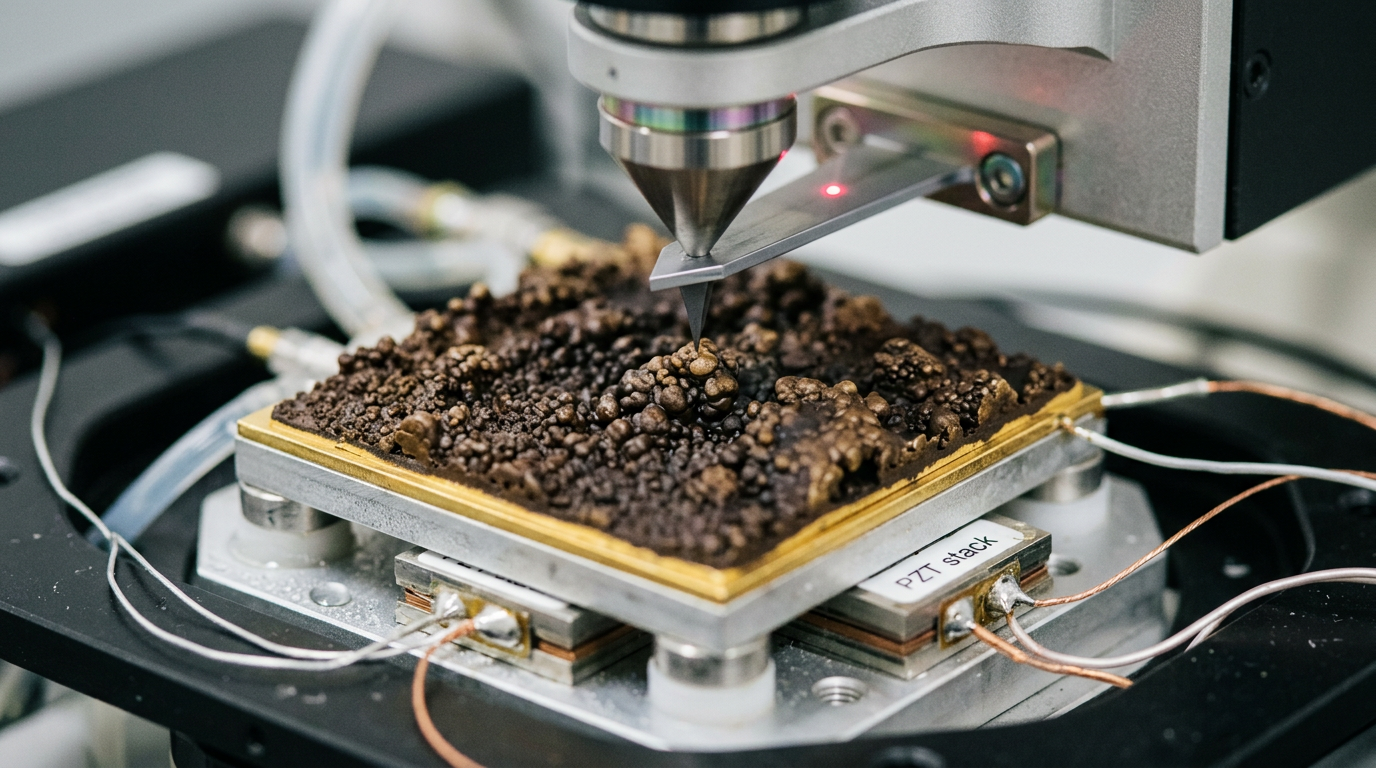
Could the melanin in our cells be responding to mechanical vibrations in ways we've barely begun to understand? Recent advances in mechanobiology and piezoelectric biomaterials suggest that melanin's unique molecular structure might enable it to convert acoustic energy into electrical signals. This emerging hypothesis could revolutionize our understanding of how organisms process environmental information at the cellular level.
The human body is constantly bathed in mechanical vibrations — from the rhythmic pulsing of blood flow to the acoustic waves of sound itself. While we've long understood how specialized mechanoreceptors in our ears and skin detect these forces, a growing body of evidence suggests that mechanotransduction might be far more pervasive than previously imagined. At the center of this emerging picture is melanin, the ubiquitous biological pigment whose properties continue to surprise researchers.
Consider this: melanin granules are present not just in skin and hair, but throughout the nervous system, in the inner ear, and even in the heart. Their strategic positioning in mechanically active tissues has largely been attributed to their well-known antioxidant and photoprotective functions. But what if melanin's role extends beyond passive protection to active signal transduction?
The Piezoelectric Puzzle in Biology
Piezoelectricity — the generation of electrical charge in response to mechanical stress — was first discovered in crystals like quartz in 1880. For over a century, this phenomenon seemed confined to the realm of geology and electronics. However, researchers have increasingly recognized that biological systems exploit piezoelectric effects in surprising ways.
Bone tissue exhibits piezoelectric properties that help guide remodeling in response to mechanical stress, a discovery that earned Yasuda and Fukada recognition for their pioneering work in the 1950s. More recently, researchers have identified piezoelectric behavior in collagen, elastin, and even DNA. The common thread among these biomolecules is their ordered, crystalline-like structure — precisely the type of organization found in melanin polymers.
Melanin's molecular architecture bears striking similarities to known piezoelectric materials. Eumelanin, the most common form of melanin, consists of highly ordered stacks of indole-based polymers arranged in what researchers describe as "protomolecules." These structures exhibit π-π stacking interactions that create organized layers, much like the crystalline arrangements that give rise to piezoelectricity in synthetic materials.
The work of McGinness and colleagues in the 1970s first demonstrated that melanin behaves as an organic semiconductor with a bandgap of approximately 1.85 eV. Their research revealed that melanin's electrical properties are highly sensitive to hydration and mechanical perturbation — both hallmarks of piezoelectric materials. When melanin granules are subjected to pressure or deformation, their electronic structure changes in predictable ways.
Mechanotransduction Meets Melanin Biology
The intersection of melanin research and mechanobiology has yielded intriguing clues about potential piezoelectric effects. Studies of neuromelanin in the substantia nigra have shown that these pigmented neurons are exquisitely sensitive to mechanical stimulation. While traditionally attributed to dopaminergic signaling pathways, some researchers now wonder whether melanin granules themselves might be contributing to mechanosensitive responses.
In the auditory system, melanin's presence in the inner ear has long puzzled researchers. The stria vascularis of the cochlea contains abundant melanin-producing cells, and hearing loss has been associated with melanin deficiency in several genetic conditions. Recent work by Tachibana and colleagues has suggested that melanin in the inner ear might play active roles in sound transduction beyond simple protection from acoustic trauma.
The hypothesis gains additional support from studies of mechanically induced charge separation in melanin films. When subjected to ultrasonic vibrations, melanin samples show measurable changes in electrical conductivity and charge distribution. These effects are frequency-dependent, with certain acoustic frequencies producing more pronounced responses than others.
Perhaps most intriguingly, research on melanin's response to different types of mechanical stress has revealed that the pigment exhibits memory-like properties. After exposure to specific vibrational patterns, melanin samples retain altered electrical characteristics for extended periods — suggesting a form of mechanical memory that could serve as a biological information storage mechanism.
Frequency-Dependent Biological Effects
If melanin does exhibit piezoelectric properties, it would provide a biophysical foundation for understanding frequency-dependent biological effects that have long puzzled researchers. Studies dating back to the 1960s have documented that specific acoustic frequencies can influence cellular metabolism, gene expression, and even tissue regeneration rates.
The work of Oster and colleagues demonstrated that low-frequency vibrations can accelerate bone healing, while certain ultrasonic frequencies have been shown to influence neural activity patterns. These effects have typically been attributed to direct mechanical stimulation of cell membranes or cytoskeletal structures. However, the melanin piezoelectric hypothesis suggests an additional pathway: acoustic energy could be converted to electrical signals by melanin granules, which then influence cellular signaling cascades.
This mechanism could explain why organisms across diverse taxa have evolved melanin-rich structures in mechanically active environments. The melanosomes in bird feathers, for instance, might serve not only for coloration and UV protection but also as acoustic sensors that help birds navigate using infrasonic waves. Similarly, the abundant melanin in marine mammal brains might contribute to their sophisticated echolocation abilities.
Recent computational modeling by Mostert and colleagues has explored how melanin's unique combination of semiconductor properties and hydrated polymer structure could enable it to function as a biological piezoelectric transducer. Their simulations suggest that melanin granules could generate measurable electrical potentials in response to acoustic stimulation, with the magnitude and polarity of these signals depending on the frequency and intensity of the mechanical input.
Implications for Bioelectric Signaling Networks
The potential piezoelectric properties of melanin take on additional significance when considered in the context of bioelectric signaling networks. Michael Levin's laboratory has demonstrated that cells use electrical signals to coordinate complex developmental processes, wound healing, and even cancer suppression. These bioelectric circuits depend on precise control of membrane potentials and ion flows — exactly the type of electrical phenomena that piezoelectric melanin could influence.
If melanin granules can convert mechanical vibrations into electrical signals, they might serve as biological transducers that allow cells to sense and respond to their acoustic environment. This could provide a mechanism for long-range cellular communication that operates independently of chemical signaling pathways.
The implications extend beyond basic biology to potential therapeutic applications. Focused acoustic stimulation of melanin-rich tissues might offer new approaches for modulating cellular behavior in targeted ways. Early research into therapeutic ultrasound has already shown promise for treating conditions ranging from depression to chronic pain — effects that might be mediated, in part, by acoustic stimulation of neuromelanin.
Key Takeaways
• Melanin's ordered polymer structure and semiconductor properties make it a plausible candidate for biological piezoelectricity, potentially converting mechanical vibrations into electrical signals within cells.
• The strategic distribution of melanin in mechanically active tissues — including the nervous system, inner ear, and cardiovascular system — supports the hypothesis that it may play active roles in mechanotransduction.
• Frequency-dependent biological effects observed across multiple species could be explained by melanin's proposed ability to selectively respond to specific acoustic frequencies through piezoelectric charge separation.
• Melanin's demonstrated memory-like properties suggest it could serve as both a mechanical sensor and a biological information storage system, retaining patterns of acoustic stimulation.
• The integration of piezoelectric melanin with established bioelectric signaling networks could provide cells with sophisticated mechanisms for environmental sensing and long-range communication.
• Understanding melanin's potential piezoelectric properties could lead to novel therapeutic approaches using targeted acoustic stimulation to modulate cellular behavior in melanin-rich tissues.
References
McGinness, J., Corry, P., & Proctor, P. "Amorphous semiconductor switching in melanins." Science 183(4127), 853-855 (1974).
Mostert, A. B. "Melanin, the what, the why and the how: An introductory review for materials scientists interested in flexible and versatile polymers." Polymers 13(10), 1670 (2021).
Yasuda, I. "Fundamental aspects of fracture treatment." Journal of Kyoto Medical Society 4, 395-406 (1953).
Tachibana, M. "Sound needs sound melanocytes to be heard." Pigment Cell Research 12(6), 344-354 (1999).
Levin, M. "Bioelectric signaling: Reprogrammable circuits underlying embryogenesis, regeneration, and cancer." Cell 184(8), 1971-1989 (2021).
Oster, G. "Auditory beats in the brain." Scientific American 229(4), 94-102 (1973).
Solís-Herrera, A., Ashraf, G. M., Zamyatnin, A. A., & Aliev, G. "The water dissociation ability by melanin and its role in energy production." Biochimica et Biophysica Acta 1850(2), 212-221 (2015).
Fukada, E., & Yasuda, I. "On the piezoelectric effect of bone." Journal of the Physical Society of Japan 12(10), 1158-1162 (1957).