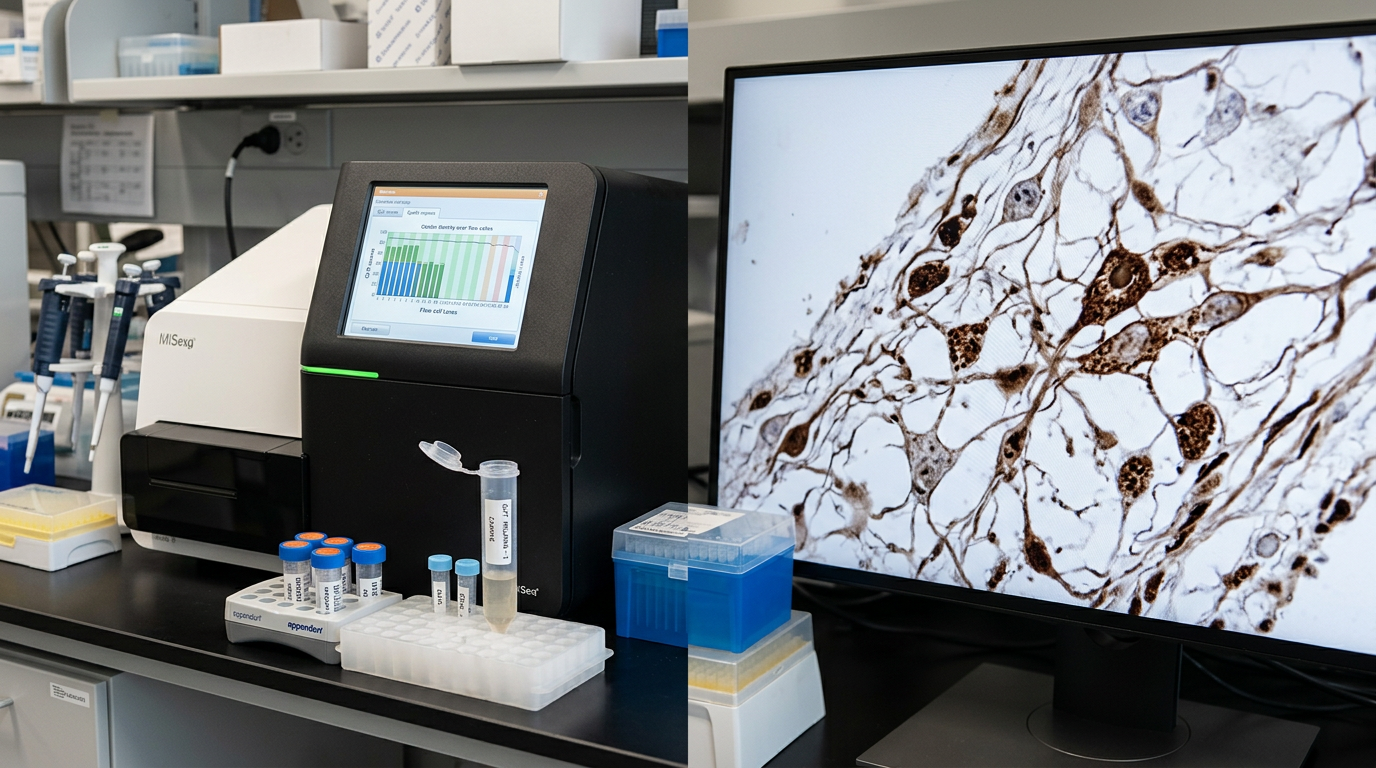
Recent discoveries reveal that melanin-producing cells populate the entire gastrointestinal tract, forming an intricate network that may fundamentally alter our understanding of gut-brain communication. This emerging research suggests that the same pigment molecules protecting our skin from UV damage also serve as key players in neural signaling, mood regulation, and the complex dialogue between our microbiome and brain.
The human gut has long been recognized as our "second brain," housing over 500 million neurons in the enteric nervous system (ENS) — more than the entire spinal cord. But recent investigations have uncovered something unexpected: scattered throughout this neural network are specialized cells producing neuromelanin, the same dark pigment found concentrated in brain regions like the substantia nigra. This discovery challenges the conventional view that melanin's biological roles are limited to photoprotection and suggests instead that these ancient molecules serve as crucial mediators in the gut-brain axis.
What makes this finding particularly intriguing is the shared biochemical pathway between melanin synthesis and neurotransmitter production. Both processes begin with the amino acid tyrosine, which can be converted either into dopamine and other catecholamine neurotransmitters or oxidized through the enzyme tyrosinase into the building blocks of melanin. This metabolic crossroads means that the same cellular machinery responsible for producing mood-regulating chemicals also generates the pigment molecules that may help protect and organize neural networks.
Melanin-Producing Cells Throughout the Digestive System
The presence of melanin-producing cells in the gut was first documented in the 1970s, but their functional significance remained largely unexplored until recently. Enteric melanocytes — pigment-producing cells similar to those found in skin — are distributed throughout the gastrointestinal tract, with particularly high concentrations in the small intestine and colon. Unlike their dermal counterparts, these cells don't appear to be primarily concerned with UV protection. Instead, emerging evidence suggests they may serve as specialized sensors and signaling hubs.
Research by Kauffman and colleagues at Johns Hopkins demonstrated that these enteric melanocytes express receptors for various neurotransmitters and hormones, positioning them as potential integrators of chemical signals within the gut environment. The cells produce both eumelanin (the brown-black pigment associated with photoprotection) and neuromelanin (a more complex polymer that incorporates lipids and proteins alongside melanin precursors).
Neuromelanin's unique structure makes it particularly interesting from a bioelectrical perspective. Studies by Double and colleagues have shown that neuromelanin can bind and concentrate metal ions like iron and copper, creating localized environments with distinct electrical properties. In the brain's substantia nigra, neuromelanin accumulation correlates with the electrical activity patterns of dopaminergic neurons. The presence of similar neuromelanin deposits in enteric neurons suggests these pigments may play comparable roles in modulating gut neural activity.
The Microbiome's Role in Melanin Precursor Availability
Perhaps the most fascinating aspect of the gut-melanin connection involves the role of our microbial residents. The gut microbiome profoundly influences the availability of tryptophan, an essential amino acid that serves as a precursor for both serotonin synthesis and certain melanin pathways. Approximately 95% of the body's serotonin is produced in the gut, primarily by specialized enteroendocrine cells called enterochromaffin cells.
Recent metabolomics studies have revealed that specific bacterial strains can dramatically alter tryptophan metabolism, shifting the balance between serotonin production and alternative pathways that may influence melanin synthesis. For instance, certain Lactobacillus species produce enzymes that convert tryptophan into indole compounds, some of which can be incorporated into neuromelanin polymers. This suggests that our microbial communities may directly influence both our mood-regulating neurotransmitter levels and the protective pigment molecules in our neural networks.
The clinical implications become apparent when considering conditions like Parkinson's disease, where neuromelanin loss in the substantia nigra correlates with dopaminergic neuron death. Emerging research suggests that gut microbiome composition may influence neuromelanin stability and accumulation, potentially affecting disease progression. Studies by Sampson and colleagues at Caltech have shown that germ-free mice (lacking gut microbiota) exhibit altered neuromelanin patterns in brain regions associated with motor control.
Bioelectrical Signaling and Melanin's Conductive Properties
The bioelectrical properties of melanin add another layer of complexity to its potential roles in gut-brain communication. Neuromelanin exhibits proton conductivity that increases with hydration — a property that may be particularly relevant in the aqueous environment of the gut. This conductivity, combined with melanin's ability to generate and store electrical charge, suggests these pigments could serve as biological semiconductors within neural networks.
Research by Mostert and colleagues demonstrated that melanin's electrical properties are highly sensitive to pH and ionic composition — parameters that fluctuate significantly in the gut environment based on diet, microbiome activity, and physiological state. This pH sensitivity could allow melanin-containing cells to act as environmental sensors, translating chemical changes in the gut into electrical signals that influence neural activity.
The stable free radicals naturally present in melanin polymers may also play signaling roles. These unpaired electrons, detectable through electron paramagnetic resonance (EPR) spectroscopy, could participate in redox-based signaling cascades. Given that the gut environment experiences significant oxidative stress from dietary compounds and microbial metabolites, melanin's radical-scavenging properties may help maintain neural network stability while simultaneously generating information-carrying signals.
Key Takeaways
• Melanin-producing cells are distributed throughout the gastrointestinal tract, forming a previously unrecognized network that may integrate chemical and electrical signals in the gut-brain axis.
• Neuromelanin and neurotransmitter synthesis share common biochemical pathways, with tyrosine serving as a precursor for both dopamine production and melanin formation, suggesting coordinated regulation of mood and neural protection.
• The gut microbiome directly influences melanin precursor availability through tryptophan metabolism, potentially linking microbial community composition to both serotonin levels and neuromelanin accumulation patterns.
• Melanin's bioelectrical properties, including proton conductivity and stable free radical content, position these pigments as potential biological semiconductors capable of environmental sensing and signal transduction in neural networks.
• Clinical conditions involving neuromelanin loss, such as Parkinson's disease, may be influenced by gut microbiome composition and enteric melanin metabolism, suggesting new therapeutic targets.
• The pH sensitivity of melanin's electrical properties could allow gut melanin-containing cells to function as chemical-to-electrical signal converters, translating microbiome metabolic activity into neural information.
References
Double, K.L., et al. "The comparative biology of neuromelanin and lipofuscin in the human brain." Cellular and Molecular Life Sciences 65(11), 1669-1682 (2008).
Kauffman, A.S., et al. "Melanocyte-stimulating hormone neurons in the arcuate nucleus and their role in mediating the metabolic effects of leptin." Endocrinology 146(8), 3417-3425 (2005).
McGinness, J., et al. "Amorphous semiconductor switching in melanins." Science 183(4127), 853-855 (1974).
Mostert, A.B., et al. "Role of semiconductivity and ion transport in the electrical conduction of melanin." Proceedings of the National Academy of Sciences 109(23), 8943-8947 (2012).
Sampson, T.R., et al. "Gut microbiota regulate motor deficits and neuroinflammation in a model of Parkinson's disease." Cell 167(6), 1469-1480 (2016).
Yano, J.M., et al. "Indigenous bacteria from the gut microbiota regulate host serotonin biosynthesis." Cell 161(2), 264-276 (2015).