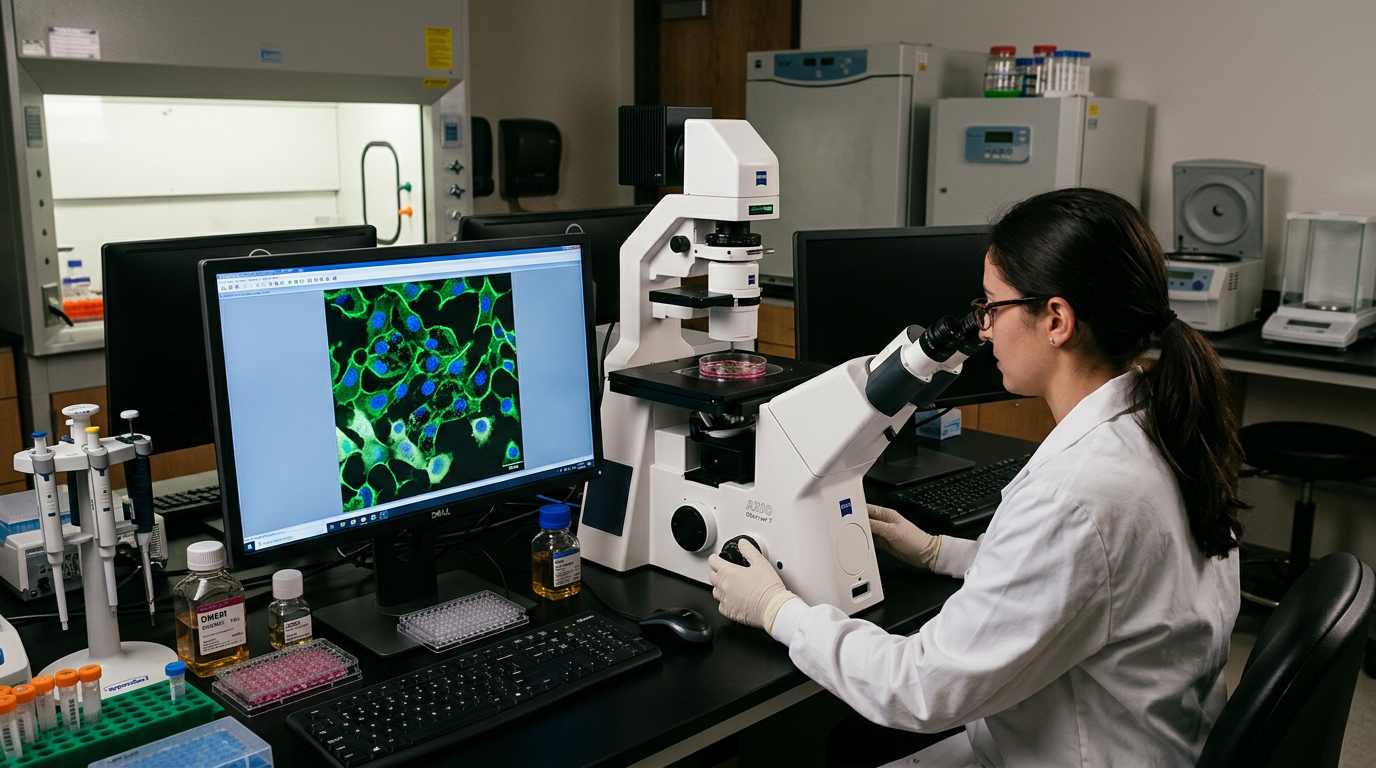
Cells speak in electrical whispers long before they shout with malignant growth. Recent discoveries reveal that cancer may fundamentally be a bioelectric disease—one where cellular voltage patterns predict and potentially control tumor formation with startling precision.
The human body operates as a vast electrical network, with every cell maintaining a carefully regulated voltage across its membrane. Most healthy cells keep their interior at roughly -50 to -90 millivolts relative to their surroundings—a state called hyperpolarization. But when this cellular battery begins to fail, when the voltage climbs toward zero in a process called depolarization, something ominous occurs: the cell begins behaving like a cancer cell.
This isn't merely correlation. In laboratories at Tufts University, researchers have demonstrated that they can predict which cells will become cancerous simply by measuring their voltage. More remarkably, they can prevent tumor formation by artificially restoring proper electrical conditions—suggesting that cancer's electrical signature isn't just a consequence of the disease, but potentially a cause.
The implications extend far beyond oncology. If cellular electricity governs the switch between healthy growth and malignant proliferation, then understanding how biological materials like melanin interact with these electrical systems could reveal new approaches to cancer prevention and treatment. The same pigment that colors our skin and protects us from UV radiation may also play an unrecognized role in maintaining the electrical integrity that keeps our cells functioning normally.
The Bioelectric Blueprint of Cancer
Michael Levin's laboratory at Tufts University has spent over a decade mapping the electrical landscape of living tissues, revealing that membrane potential—the voltage difference across a cell's outer boundary—serves as a master regulator of cellular behavior. Their research demonstrates that cells with membrane potentials less negative than -20 millivolts consistently exhibit cancer-like properties: uncontrolled proliferation, loss of normal tissue architecture, and resistance to growth-inhibiting signals.
The mechanism centers on voltage-gated ion channels, protein gates in the cell membrane that open and close in response to electrical changes. When a cell becomes depolarized, these channels alter their activity patterns, triggering cascades of molecular events that fundamentally reprogram cellular behavior. Potassium channels, which normally help maintain hyperpolarization by allowing positive potassium ions to exit the cell, become less active. Sodium and calcium channels may become hyperactive, flooding the cell with positive charges and disrupting normal signaling pathways.
This electrical disruption affects multiple cancer-associated processes simultaneously. Voltage-gated proliferation occurs because many genes involved in cell division are sensitive to membrane potential changes. The tumor suppressor protein p53, often called the "guardian of the genome," requires proper electrical conditions to function effectively. When cellular voltage climbs toward zero, p53's protective mechanisms weaken, allowing damaged cells to survive and multiply rather than undergo programmed cell death.
Perhaps most significantly, Levin's team has shown that artificially hyperpolarizing cells using ion channel drugs can prevent tumor formation in experimental models. By forcing cells to maintain proper electrical conditions—typically around -50 to -70 millivolts—they can suppress malignant transformation even in the presence of known carcinogens. This suggests that maintaining cellular electrical health might be as important as avoiding DNA damage in cancer prevention.
Ion Channels as Cancer's Electrical Switches
The relationship between ion channels and cancer extends beyond simple voltage maintenance. Different types of cancer cells exhibit characteristic patterns of ion channel expression, creating distinct electrical fingerprints that researchers are learning to read and potentially exploit therapeutically.
Voltage-gated sodium channels, normally associated with nerve and muscle cell excitability, become abnormally active in many cancer types. These channels, particularly the Nav1.5 subtype typically found in heart muscle, appear in breast, lung, and colon cancers where they don't belong. Their presence correlates with increased cell motility and invasive behavior—the electrical equivalent of giving cancer cells a motor to spread throughout the body.
Potassium channels present a more complex picture. While some potassium channel types become underactive in cancer (contributing to depolarization), others become overexpressed. The hERG potassium channel, crucial for heart rhythm regulation, paradoxically promotes cancer cell survival when expressed in tumors. This channel appears to help cancer cells resist chemotherapy-induced cell death, creating a form of electrical drug resistance.
Calcium signaling represents another critical electrical pathway in cancer development. Voltage-gated calcium channels control the entry of calcium ions into cells, where calcium serves as a universal signaling molecule affecting everything from gene expression to cell movement. Many cancer cells exhibit altered calcium channel expression patterns that disrupt normal calcium homeostasis, leading to the sustained proliferative signaling that characterizes malignant growth.
The therapeutic implications are profound. Researchers are developing bioelectric cancer markers—electrical measurements that could detect malignant transformation before traditional methods. By monitoring membrane potential and ion channel activity patterns, clinicians might identify pre-cancerous cells years before they form detectable tumors, opening new windows for early intervention.
Melanin's Electrical Connection
While melanin is best known for its role in pigmentation and UV protection, emerging research reveals sophisticated electrical properties that may intersect with cancer biology in unexpected ways. Melanin functions as a biological semiconductor with a bandgap of approximately 1.85 electron volts, allowing it to conduct electricity under certain conditions while acting as an insulator under others.
This semiconducting behavior becomes particularly relevant in the context of cellular bioelectricity. Melanin's electrical conductivity increases dramatically with hydration, suggesting it could serve as a moisture-sensitive electrical regulator within cells. In melanin-rich tissues like the substantia nigra of the brain or the pigmented layer of the retina, this property might help maintain proper electrical conditions for cellular function.
The connection to cancer becomes clearer when considering melanin's role in proton conductivity. Recent studies demonstrate that melanin can facilitate the movement of protons (hydrogen ions) through biological tissues, potentially affecting local pH and electrical gradients. Since cellular pH and membrane potential are intimately connected—changes in one typically affect the other—melanin's proton-conducting properties could influence the electrical environment that determines cancer risk.
Neuromelanin, the dark pigment found in brain cells, offers particularly intriguing insights. This form of melanin accumulates with age and contains bound metal ions, particularly iron, that could affect its electrical properties. The loss of neuromelanin-containing neurons in Parkinson's disease suggests this pigment plays important roles in cellular electrical homeostasis. If neuromelanin helps maintain proper bioelectric conditions in brain cells, its dysfunction might contribute to both neurodegeneration and altered cancer susceptibility in neural tissues.
The stable free radicals present in melanin add another electrical dimension. These unpaired electrons, detectable by electron paramagnetic resonance (EPR) spectroscopy, could participate in cellular redox reactions that influence membrane potential and ion channel function. By modulating the oxidative environment around cells, melanin might indirectly affect the electrical conditions that determine cancer risk.
Implications for Cancer Prevention and Treatment
The convergence of bioelectric cancer research and melanin science points toward novel therapeutic strategies that target cellular electricity rather than just genetic mutations. If cancer fundamentally represents a bioelectric disease, then treatments focused on restoring proper cellular voltage could complement or even replace traditional approaches.
Bioelectric normalization therapy represents one promising direction. Rather than trying to kill cancer cells with toxic chemotherapy, clinicians might use targeted electrical interventions to restore normal membrane potential and ion channel function. This could involve combinations of existing ion channel drugs—many already approved for treating heart rhythm disorders or epilepsy—repurposed for cancer prevention and treatment.
The melanin connection suggests additional possibilities. If melanin's electrical properties contribute to cellular bioelectric homeostasis, then supporting melanin function or developing melanin-inspired materials could enhance cancer prevention strategies. This might involve nutritional approaches to support melanin synthesis, topical applications of melanin-based compounds, or even bioengineered melanin derivatives designed to optimize cellular electrical conditions.
Diagnostic applications appear equally promising. Bioelectric cancer screening could revolutionize early detection by identifying electrical abnormalities before genetic mutations accumulate to dangerous levels. Simple voltage measurements, potentially combined with assessments of melanin content and distribution, might provide powerful new tools for cancer risk assessment.
The research also suggests that environmental factors affecting cellular electricity—from electromagnetic field exposure to nutritional deficiencies that impair ion channel function—deserve greater attention in cancer prevention strategies. Understanding how lifestyle and environmental factors influence cellular bioelectricity could lead to more effective prevention protocols based on maintaining optimal electrical health.
Key Takeaways
• Cellular membrane potential serves as a master regulator of cancer risk, with depolarized cells (less negative than -20mV) consistently exhibiting malignant properties that can be reversed through electrical intervention.
• Ion channels function as molecular switches controlling cancer-associated behaviors, with specific channel types creating characteristic electrical fingerprints that could serve as early diagnostic markers.
• Melanin's semiconductor properties and proton conductivity suggest it may play unrecognized roles in maintaining cellular bioelectric homeostasis, potentially influencing cancer susceptibility through electrical mechanisms.
• Bioelectric normalization therapy using existing ion channel drugs could provide new treatment approaches that restore healthy cellular voltage rather than relying solely on cytotoxic chemotherapy.
• The convergence of bioelectricity and melanin research points toward novel cancer prevention strategies based on maintaining optimal cellular electrical conditions through both pharmacological and lifestyle interventions.
• Environmental and nutritional factors affecting cellular electricity may represent underexplored but crucial elements in cancer prevention, warranting investigation of how electromagnetic exposure and dietary choices influence bioelectric health.
References
Levin, M. "Bioelectric signaling: Reprogrammable circuits underlying embryogenesis, regeneration, and cancer." Cell 184(8), 1971-1989 (2021). DOI: 10.1016/j.cell.2021.02.034
Yang, M. & Brackenbury, W.J. "Membrane potential and cancer progression." Frontiers in Physiology 4, 185 (2013). DOI: 10.3389/fphys.2013.00185
Sundelacruz, S., Levin, M. & Kaplan, D.L. "Role of membrane potential in the regulation of cell proliferation and differentiation." Stem Cell Reviews and Reports 5(3), 231-246 (2009). DOI: 10.1007/s12015-009-9080-2
McGinness, J., Corry, P. & Proctor, P. "Amorphous semiconductor switching in melanins." Science 183(4127), 853-855 (1974). DOI: 10.1126/science.183.4127.853
Fraser, S.P. & Pardo, L.A. "Ion channels: functional expression and therapeutic potential in cancer." Colloquium Series on Integrated Systems Physiology 4(1), 1-135 (2008). DOI: 10.4199/C00005ED1V01Y200802ISP003
Chernet, B.T. & Levin, M. "Transmembrane voltage potential controls embryonic eye patterning in Xenopus laevis." Development 140(2), 313-324 (2013). DOI: 10.1242/dev.073759